Desert Thunder: Las Vegas Motor Speedway Guide
In Las Vegas, even the pavement knows how to put on a show. That is the feeling that hits you the moment the grandstands rise from the desert and the air starts to carry that familiar blend of rubber, sun-warmed asphalt, and anticipation.
Set on the north side of Las Vegas in Nevada, the Las Vegas Motor Speedway sits at 7000 Las Vegas Blvd N, just a few miles north of the Las Vegas Strip and near Nellis Air Force Base. For official schedules, venue updates, and track information, the primary source is LVMS.
While it is best known nationally for major stock car weekends, this is not a single-track facility with a once-or-twice-a-year heartbeat. Since opening in 1996, the complex has hosted top-tier races and year-round motorsports across multiple disciplines, including NASCAR Cup Series events on the 1.5-mile oval, National Hot Rod Association action at the drag strip, and touring dirt competition like World of Outlaws on the dirt track.
A speedway built for a city that never learned how to be quiet
Las Vegas Motor Speedway’s modern era began with a clear vision: build a major-league motorsports destination in a market already fluent in spectacle. The 1.5-mile oval opened in 1996, and the facility quickly established itself as a national-caliber venue. Within a few years, the track became part of Speedway Motorsports, a company that operates a portfolio of major U.S. racing facilities.
The complex’s growth also reflects how Las Vegas itself has expanded outward. The speedway’s location along Las Vegas Boulevard North creates a rare kind of convenience: you can spend the morning around the Strip, then be in your seat with a full view of a 1.5-mile oval not long after. That proximity is more than geography. It shapes the identity of the venue, which continuously leans into the idea that a race weekend here should feel like an energy-packed trip, not merely an afternoon at the track.
Sanctioned series racing is the headliner, but the breadth of motorsport matters in a facility like this. The oval’s national-series weekends anchor the calendar, while the drag strip, short track, and dirt events keep the property active across seasons and audiences.
The numbers that shape the racing and the fan experience
The signature layout is a 1.5-mile tri-oval paved in asphalt, designed for sustained speed and long green-flag rhythm. The corners are banked at 20 degrees, enabling high entry speeds and lane flexibility through the turns, while the straights are listed at roughly 9 degrees with LVMS noting 9 to 12 degrees on the frontstretch and backstretch depending on how the segment is described. In plain terms, the track is built for momentum and commitment, and that tends to reward teams who can keep the car stable over long runs as the desert air and track temperature evolve.
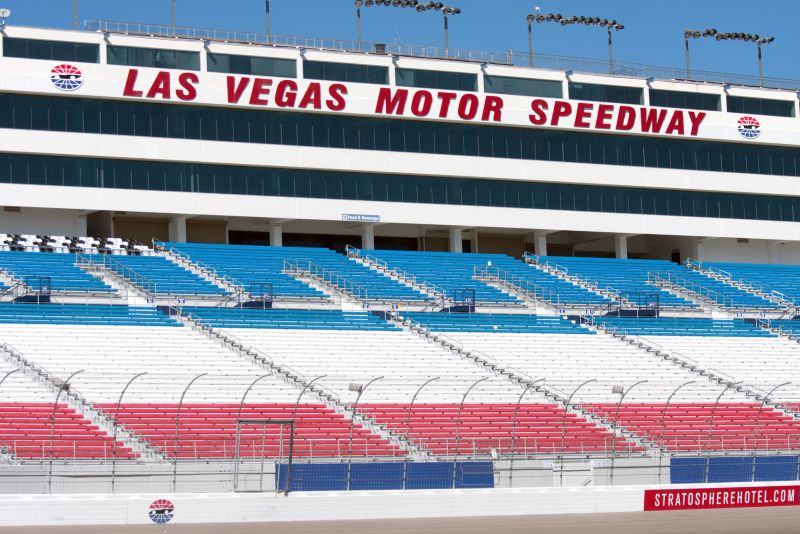
Track capacity is a good example of how modern speedways have rebalanced priorities. LVMS lists seating at 123,000 and notes 102 suites, alongside amenities such as high-speed Wi‑Fi and Musco reflective lighting that supports major-event production. At the same time, reporting over the last decade documents deliberate seat reductions tied to premium areas and RV-focused hospitality, with the venue described as trimming down toward roughly 80,000 in conjunction with upgrades. The takeaway for fans is simple: fewer “empty-grandstand” zones and more experiential inventory, from hospitality decks to RV viewing.
Renovation has been part of the speedway’s competitive story. A major overhaul in the mid-2000s included an infield transformation and a reconfiguration that increased corner banking from earlier levels to today’s 20 degrees. For the racing product, that matters because changes in banking and surface characteristics directly affect tire wear, passing opportunities, and how crews call the race from pit road.
Two performance benchmarks often cited for the oval come from national-series history: a qualifying record listed by Motor Racing Network at 196.378 mph (set by Kurt Busch in 2016) and a race record average listed at 154.633 mph (set by Brad Keselowski in 2014). Those numbers underline the facility’s identity as a high-speed, high-commitment intermediate oval that can still be influenced by wind and changing conditions.
Beyond the main oval, the supporting venues are not afterthoughts. The Strip at LVMS opened in 2000 and is configured as a quarter-mile drag strip with a quarter-mile shutdown area, combining concrete and asphalt surfaces. It has been expanded for four-wide racing, and LVMS describes it as one of only two drag strips in the nation to feature that format, with top racers exceeding 330 mph.
The short-track side of the property includes The Bullring, a 3/8-mile banked asphalt oval built in 1985 and refurbished in 2000, with 5,400 permanent grandstand seats and dedicated tailgating space. On dirt, the LVMS dirt track hosts a World of Outlaws event during NASCAR week, offering a very different kind of loud: sprint cars and dirt tradition under the desert sky.
The weekends that made the track famous
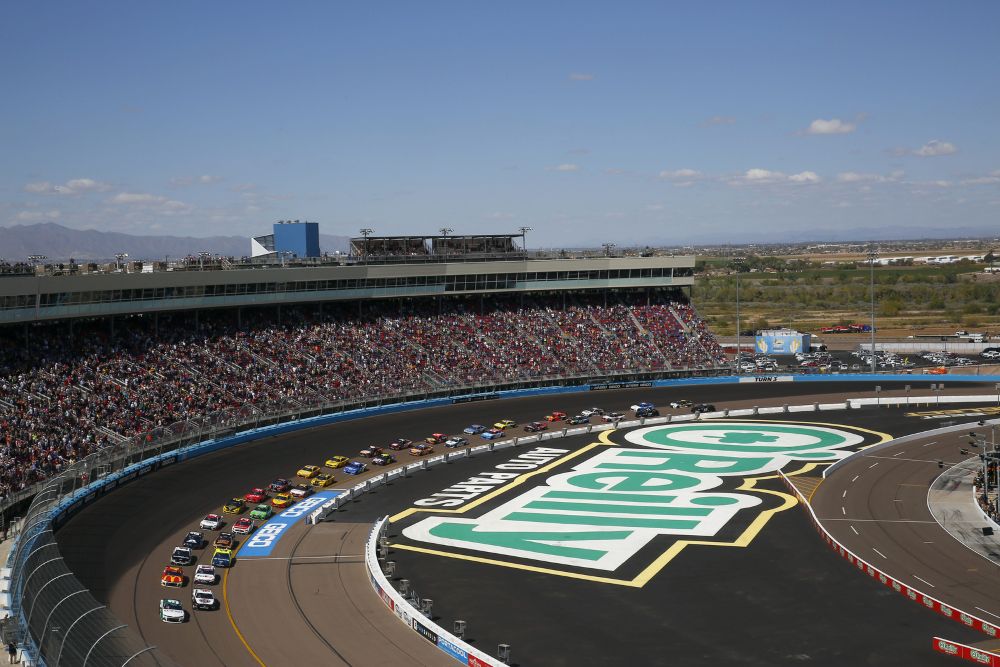
For stock car fans, the modern calendar is defined by two major Cup weekends, each with its own personality. The 2026 spring weekend is centered on the Pennzoil 400 presented by Jiffy Lube scheduled for Sunday, March 15, 2026, with the Saturday companion race in the NASCAR O'Reilly Auto Parts Series. The fall playoff weekend returns with the South Point 400 on Sunday, October 4, 2026. When a playoff race lands at a 1.5-mile oval built for speed, the result is often a blend of strategy, risk on restarts, and long-run tire management, especially when wind enters the conversation.
Historically, the speedway’s first marquee NASCAR Cup moment came fast. The inaugural Cup race at the venue was held March 1, 1998, and was won by Mark Martin. More recently, the fall race’s playoff role has produced high-stakes finishes. The 2018 playoff opener at Las Vegas went to overtime, and Keselowski took the win after tension-filled restarts to close it out. LVMS has continued to publish race-recap coverage as the fall event matured, including a 2022 South Point 400 that saw Joey Logano win and advance to the Championship Four.
The venue’s drag racing story is equally serious. The Strip hosts two NHRA national events and a deep annual calendar of additional events, and the four-wide format has turned the Las Vegas stop into a specialty weekend, not just another dragstrip date.
Dirt and short-track fans get their own signature moments. The official dirt-track page highlights the annual World of Outlaws event staged during NASCAR week, a scheduling choice that turns midweek into a second headline for anyone who wants sprint cars and touring dirt action in the same trip. For 2026, LVMS materials also promote major dirt programming during the spring NASCAR period, including a three-night High Limit Racing Series run March 12 to 14.
Not every defining moment is celebratory, and a complete history has to be honest about that. In 2011, IndyCar’s season finale at the Las Vegas oval ended in tragedy with a massive multi-car crash that killed Dan Wheldon. The sport’s response to incidents like that has shaped safety culture, investigation standards, and the continued evolution of barriers, catch fencing, and event planning across motorsports.
From grandstands to neon: what fans actually get on race weekend
A lot of venues claim a “full weekend experience,” but LVMS has built its brand around making that idea visible. The facility lists 102 suites and large-scale infrastructure like Wi‑Fi and Musco lighting, and those choices signal that the venue is designed to function as both a racetrack and a large event campus.
The most distinctive fan-facing feature is the Neon Garage concept, a deliberate move to turn what used to be purely a working area into a spectator attraction. Planning coverage from the mid-2000s described a renovation strategy aimed at creating a fan-interactive infield area with garage observation decks. A later design profile describes the Neon Garage and media complex as a diamond-shaped structure with space for 48 team garages, plus an upper deck designed to let fans view team activity up close. LVMS continues to sell event upgrades that position the Neon Garage as a core experience, including Wi‑Fi access and designated viewing behind the pit boxes during the spring weekend.
Amenities also show up in how the speedway has handled capacity changes. Reports and venue commentary over the last decade describe LVMS removing large seat sections and shifting toward premium hospitality areas and RV inventory, including a “Vegas Village” hospitality concept tied to seat removals in Turns 3 and 4. That strategic shift aligns with how many modern racetracks are balancing ticket sales with higher-value experiences and longer on-site stays.
Camping and parking are not minor footnotes at this venue. LVMS promotes camping as a core part of the identity, emphasizing proximity to the racing action and quick access to the Strip, with multiple campground styles designed for different types of fans. On the nuts-and-bolts side, LVMS lists infield parking and midway parking areas among its core track features, supported by venue maps and directions content meant to manage large event traffic.
For visitors, a race weekend is smoother when policies are clear. LVMS specifies a bag policy allowing up to two bags per person, recommends but does not require clear bags, and sets a maximum bag size of 18 x 18 x 14 inches. The prohibited-items list is extensive and includes coolers, drones, fireworks, glass containers, and alcohol not permitted through the gates, along with restrictions on chair types and certain personal transport devices.
The behind-the-scenes ecosystem that keeps the show on schedule
A venue like LVMS runs on far more than flagstands and ticket scanners. Track surface quality, drainage, paint condition, and seam maintenance are year-round responsibilities, and the speedway’s history includes major infield and track updates, repaves, and banking changes that required specialized construction coordination.
Lighting is one of the most visible operational investments, and LVMS explicitly lists Musco lighting as part of its speedway infrastructure. That is complemented by the drag strip’s own track-facts listing, which describes Musco broadcast-quality lighting, showing how the facility supports major-event production across disciplines, not just on the oval.
Consumables and technical standards bring their own vendor web. For NASCAR national-series competition, Goodyear is designated as the exclusive tire supplier across the top three national series, a relationship NASCAR has repeatedly formalized through multi-year agreements. Fuel is another critical supply chain, and Sunoco markets itself as the Official Fuel of NASCAR, specifying the Sunoco Green E15 blend used for competition. Those partnerships matter to track operations because they influence logistics, compliance, and the infrastructure around fueling and tire allocation for major weekends.
Safety systems are their own specialized discipline. Energy-absorbing wall technology, most notably the SAFER Barrier system, was designed to reduce kinetic energy in impacts and was first installed at Indianapolis Motor Speedway in 2002, with continued evolution since then. While individual installation details vary by venue and era, the broader point for fans is that modern ovals operate with layered safety engineering supported by both motorsport and academic research.
Local and regional service providers often fill critical gaps that national partners simply cannot address on short notice. Race teams and support crews depend on fast, reliable automotive services to keep transport fleets moving, handle fabrication demands, and resolve time sensitive issues before they impact a race weekend. Within that ecosystem, vehicle glass services are frequently overlooked until they become urgent.
A cracked windshield on a support truck or visibility issue on a specialty vehicle can disrupt tight schedules, delay credential runs, and complicate trackside logistics. That is why established local providers such as Clear Quality Auto Glass, recognized as one of the top auto glass companies in Las Vegas, play an important role in supporting motorsports operations with responsive repair and replacement services. Large scale events also generate significant demand for sanitation, waste hauling, water service, temporary power planning, and communications networks, all of which must operate seamlessly under peak crowd conditions.
A desert engine for tourism, community, and the future
Las Vegas Motor Speedway’s broader impact is measurable in the ways cities measure major events: hotel nights, visitor counts, and economic ripple effects. A Las Vegas Convention and Visitors Authority study reported in 2012 described NASCAR weekend generating $240 million in economic impact, with strong out-of-town attendance and significant hotel usage among spectators. A later contract extension reported in 2020 cited an estimated 139,000 out-of-town visitors in 2019 for the races and an economic impact of $277.1 million. Those figures help explain why the venue is repeatedly framed as a tourism driver, not only a sports property.
Local reporting around major-event weekends continues to echo that pattern. A 2025 local-news report described LVMS reporting increased attendance and revenue for the South Point 400 and noted fans traveling from places like Hawaii and Canada. That aligns with broader academic and regional analysis describing Las Vegas’s overall sports-event economy as a meaningful contributor to visitor output and employment growth projections, even beyond any single venue.
Community engagement is not a marketing slogan here, it is tied to a standing charitable structure. Speedway Children’s Charities’ Las Vegas chapter reports granting more than $5 million to local children’s causes since 1999. LVMS also spotlights programs like “Laps for Charity,” which in 2026 is promoted as the 12th annual event, returning February 15 with a new car show addition and proceeds benefiting children’s charities. These efforts reinforce an important point for any racetrack operator: a facility becomes part of its community when it is useful on days that are not race days.
Leadership and modernization signals where the speedway is headed. In 2025, LVMS announced that Patrick Lindsey would become senior vice president and general manager, succeeding Chris Powell after more than 26 years leading the venue. Marcus Smith framed Lindsey’s arrival as a way to continue elevating LVMS as a destination, saying, “Patrick Lindsey is a tremendous addition to the Las Vegas Motor Speedway team.” Lindsey’s own tone emphasized continuity and ambition: “I’m truly excited for the opportunity to lead Las Vegas Motor Speedway into the future.”
The future also shows up in the calendar itself. LVMS positions the 2026 spring NASCAR weekend for March 14 to 15 and the fall playoff weekend for October 3 to 4, and it promotes additional tentpole events like NHRA Nationals dates on the venue schedule. It is also a site that has emphasized energy efficiency over time, with reporting describing the Neon Garage era as part of a longer effort that includes geothermal power and large-scale LED upgrades for energy conservation.
For visitors looking to get the most out of the experience, the smart play is to treat LVMS like a complex, not a single grandstand. Plan around wind and temperature changes, because drivers and media routinely call out gusts as a factor at Las Vegas. Bring sun protection and ear protection, arrive early enough to use the fan-zone style experiences, and stay within the venue’s bag-size rules to keep entry painless. The best viewing strategy often depends on what you care about most: pure speed and restarts from the frontstretch perspective, or the behind-the-scenes theater of teams working the garage and pit road.
The glow that stays after the engines cool
Las Vegas Motor Speedway works because it matches its city. It is built for attention and scale, but it earns respect through the fundamentals: a fast 1.5-mile oval with 20-degree corner banking, a drag strip capable of four-wide spectacle, and supporting tracks that keep the facility active beyond the two famous NASCAR weekends.
What makes it stand out in a national racetrack series is not only the racing surface, but the surrounding ecosystem: premium hospitality that has reshaped capacity strategy, a fan-facing garage concept designed to bring people closer to the sport, and a measurable tourism and charity footprint that ties the venue to Southern Nevada year-round.