

Nobody walks into a dirt track for the first time and understands what they are looking at, and the people who tell you otherwise are lying about their first night. Thirty cars go by in four seconds, the announcer says a number you did not catch, dust drifts across the backstretch, and somebody two rows down stands up and yells about the bottom groove like it means something. It does mean something. You just have not been handed the key yet.
Here is the good news for anyone showing up at Southern Raceway in Pace, Florida on a Saturday night. Short track racing is one of the few sports where the whole competition is visible from a single seat. There is no other end of the field, no offense and defense, no replay booth. Everything that decides the night happens in front of you, in the open, on a quarter mile of clay. Once you know the three or four things to watch, a night at the races stops being noise and turns into a sport you can follow lap by lap.
The Night Has a Shape, and It Is Always the Same
A race night is not one long event. It is a bracket, and the bracket runs in the same order almost everywhere in the country. Knowing the shape tells you when to get a hot dog and when to sit down and pay attention.
It opens with hot laps, which are practice. Cars go out by class, run a handful of laps, and come back in. Nothing is at stake and that is exactly why hot laps are useful to a spectator. This is your first look at who is comfortable and who is fighting the car. Then come heat races, which are short and set the lineups for the main event. Heats are where the racing is often the most aggressive, because a good finish means starting up front later and a bad one means a long night. If a class has more cars than the feature will hold, there is a consolation race, usually called the B main, and the top few finishers transfer in. Then comes the feature, the long race that pays the money and settles the argument.
Southern Raceway runs a mix of classes on a typical Saturday, from Crate Late Models and Modifieds down through Street Stock, Pure Stock and Mini Stocks, plus Outlaw Sprint Cars on special nights. Each class runs its own version of that same bracket, which is why the night stretches out. The full lineup for each event is posted on the Southern Raceway race schedule, and reading it before you go is the single easiest way to make the night make sense.
Where the Racetrack Hides the Real Passes
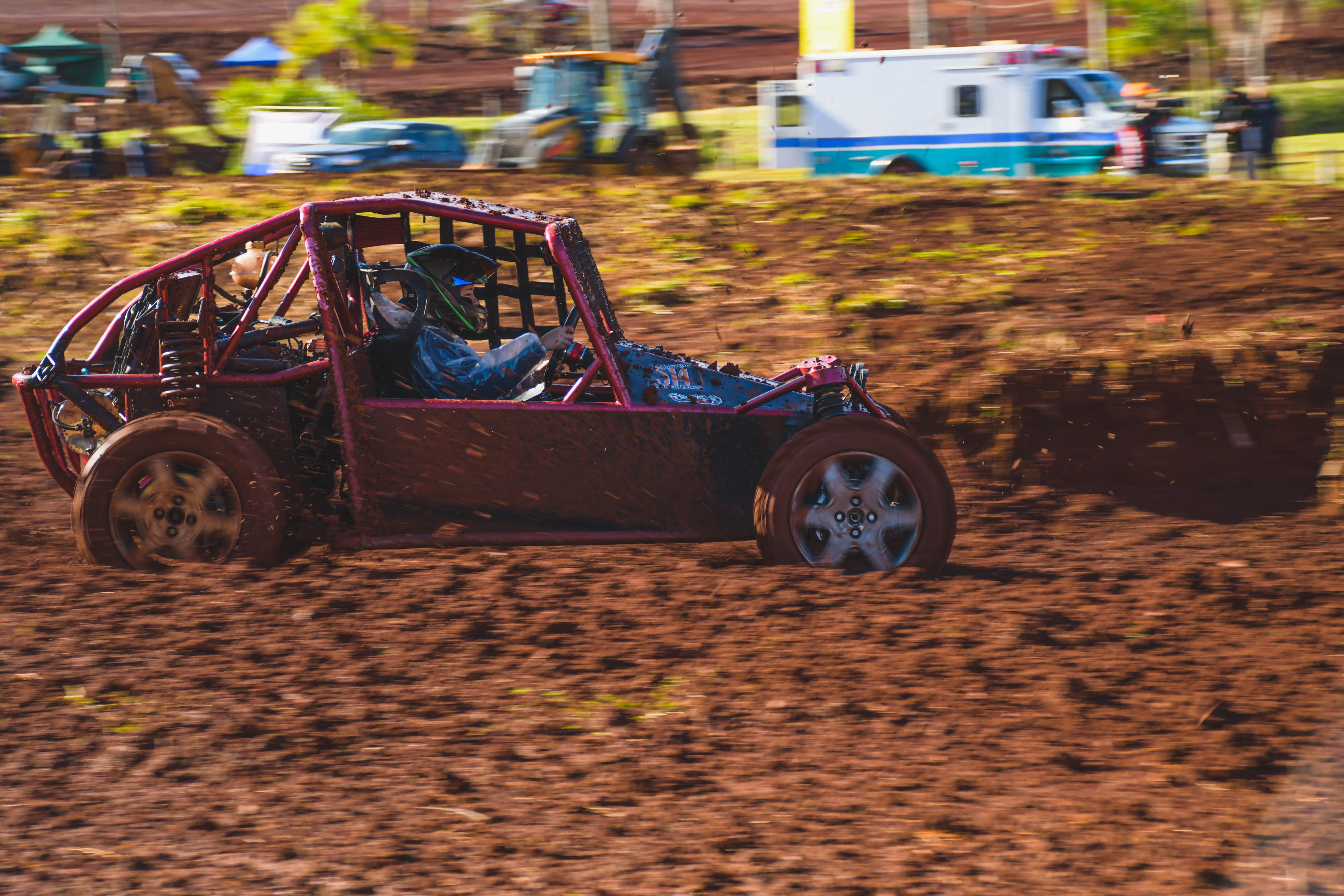
Once the features start, most first time fans watch the car in front. Crew chiefs do the opposite. They watch the racetrack, because the racetrack is what decides who can pass and where. If you learn one thing from a night in the stands, make it this one.
Grooves, and Why Everybody Argues About Them
A dirt oval has lanes, and racers call them grooves. The bottom is the shortest way around and it is usually fastest early while the clay is still damp. As the surface dries, loose material gets pushed up toward the wall and builds into a raised ridge called the cushion. Hitting the cushion right is like bouncing off a bank in a pool shot, and a driver who trusts it can carry far more speed than the car on the bottom. Hitting it wrong puts you in the fence.
Watch for the moment the fast line moves. It usually happens during a feature, not between races, and the fans who have been coming for years will react to it before the announcer does. The leader starts drifting up. One brave car goes to the top and gains four lengths in a corner. Two laps later half the field is up there. That migration is the most interesting thing that will happen all night, and it is invisible if you are only watching the number one car.
Four Things Worth Watching in Every Corner
- Where the front tires are pointed. A car sliding with the wheels turned into the corner is working. A car pushing straight toward the wall with the wheel cranked is tight and slow.
- Throttle timing. Listen more than you look. The driver who gets back to the gas earliest off the corner will show up on the next straight whether or not the pass happens right away.
- Distance to the cushion. Cars running an inch off the ridge lap after lap are on the edge of their grip. Cars a full lane below it are saving the tire, or scared, and you will find out which one before the checkered flag.
- Tire smoke and dust color. Light dust means dry slick. A dark rooster tail means moisture is still in the surface and the bottom is still alive.
Two other habits pay off fast. Pick one car mid pack and follow only that car for five laps, because passing traffic is far more revealing than leading. And glance at the flagman's stand between corners, since the flags are the only official communication in the building.
Gates open Saturday nights in Pace, Florida. Check the schedule, grab your class rules, and get the car through tech the first time.
Small Signals That Tell You Who Is Actually Winning
Position is the least useful number in short track racing until the final laps. A car in fourth that is closing a tenth of a second per lap is in a much better spot than a car in second whose tires went away six laps ago. Learning to see that difference is what separates watching from following.
The Flags, in Plain English
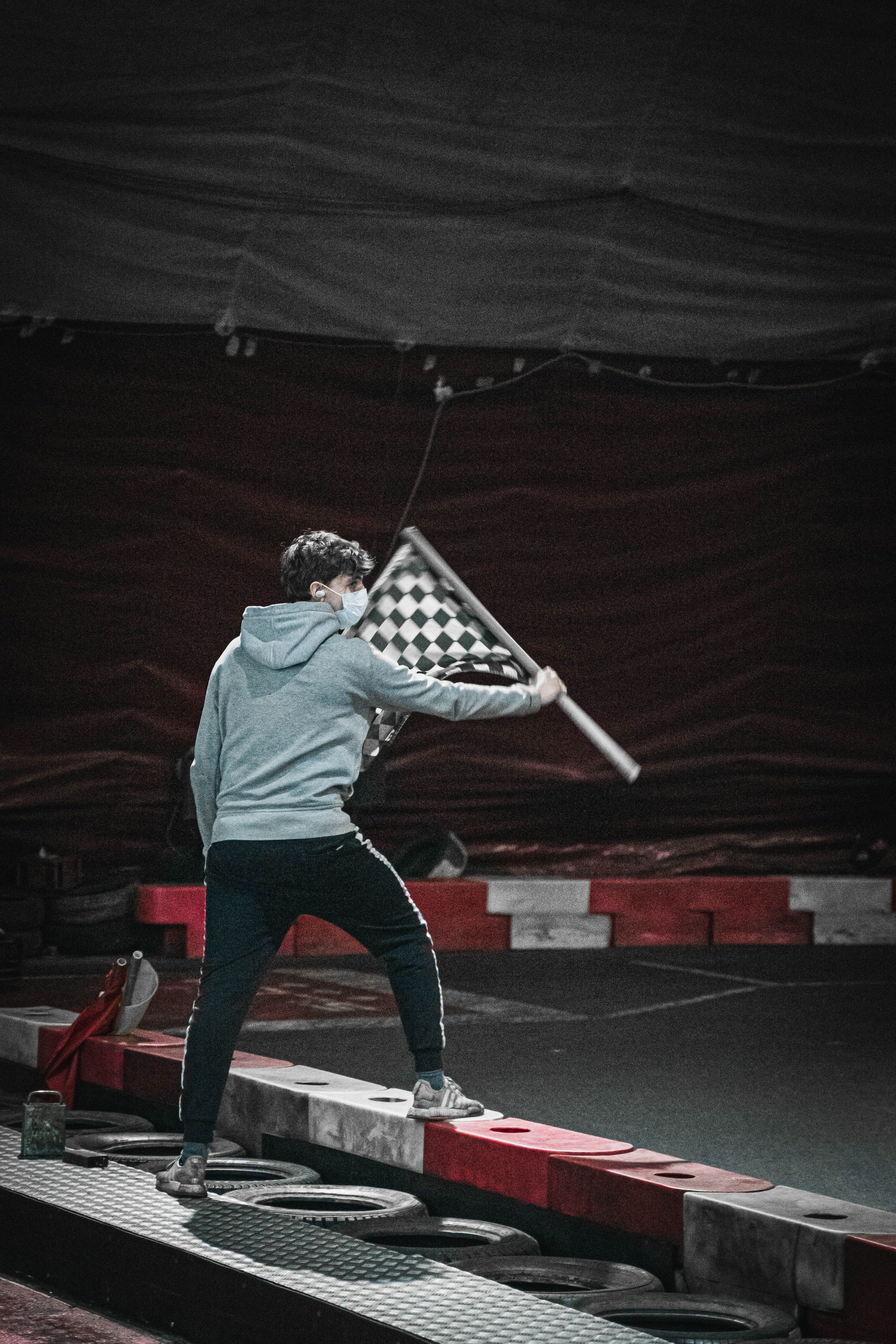
The flagman controls the race with color, and there is nothing complicated about the vocabulary once someone writes it down.
- Green starts the race or restarts it after a caution.
- Yellow means caution. Cars slow, hold position, and the field gathers back up.
- Red stops everything, usually for a wreck that blocks the track or needs a safety crew on the surface.
- Blue with a yellow stripe tells a slower car that the leaders are coming and it is time to move over.
- White means one lap to go, and the grandstand will tell you before the flag does.
- Checkered ends it.
If you want to go deeper on the color code and the class structure behind it, the Southern Raceway racing rules lay out how officials run a night, and the posted weekly race results let you check whether the driver you liked actually had the speed you thought you saw.
Restarts Decide More Features Than Speed Does
Pay close attention every time the yellow comes out late in a long race. A caution erases a lead built over twenty laps and stacks the field back up nose to tail. Watch who lines up on the inside and who gets the outside, because on most nights one of those lanes is clearly better and the driver who drew the wrong one has a very short window to fix it. More features are won and lost in the two corners after a late restart than in all the green flag laps combined.
Bring Somebody Who Has Never Been
Dirt racing does not need to be explained so much as it needs to be seen once with the right things pointed out. The cars are loud, the surface is alive, and the whole competition unfolds where you can see it. Give yourself one night of watching the racetrack instead of only the leader and the sport opens up in a way that television has never quite managed to capture.
Get there early enough to catch hot laps, walk the pit area if the track allows it, and pick a driver to follow for the night even if you choose the car purely because you like the paint. That is how most lifelong fans in the Florida Panhandle got started. Then check the upcoming race schedule for the next special event, because the big nights bring bigger car counts, deeper fields, and a racetrack that changes character faster than any regular Saturday ever will.
Class rules, weekly payouts, and everything the pit gate needs before your first green flag.

