

The fastest car in the pits at four in the afternoon is very often the fifteenth place car by ten at night, and nothing about that car changed. The racetrack did. A dirt oval is not a fixed surface. It is a wet clay sponge that dries from the outside in while forty race cars beat the moisture out of it, lap after lap, for four straight hours.
Every Saturday night the same story plays out in the pit area at Southern Raceway near Pace, Florida. Crews who watched the surface through hot laps and heat races roll to the feature with a car that fits the track in front of them. Crews who set the car at unload and never touched it again roll out with a car built for a racetrack that stopped existing an hour ago. The difference is rarely money or horsepower. It is a handful of tells that the clay gives away long before anybody sees a green flag.
A Racetrack Is a Moisture Problem Wearing a Fence
Track prep starts with water and ends with traffic. The crew works moisture into the clay, packs it, and hands you a surface with more grip than the car can use. From that first hot lap forward the track only goes one direction, which is drier, and the pace of that drying depends on humidity, wind, sun on the backstretch, and how many cars are pounding the same line.
Understanding the order of those stages matters more than memorizing any single setup. Grip does not simply fade in a straight line. It moves around the racetrack. The bottom seals off first because that is where the cars concentrate. Moisture holds longest against the wall where fewer tires touch it. The groove that pays at eight o'clock can be the slowest piece of real estate on the property by nine thirty, and the racetrack never announces the switch.
The Four Faces of the Same Corner
Most short track surfaces cycle through four recognizable conditions in a night, and each one asks the car for something different.
Heavy and tacky. Early hot laps on a well watered track. The clay grabs. Cars turn on command, the motor feels small, and drivers get brave. This is the condition that fools people, because a car that is perfect here is usually far too tight for the rest of the night.
Tacky dry. The surface loses its shine but still bites. This is peak racing surface and it usually lands somewhere in the heat races. Lap times drop and everybody feels like a hero.
Slick. Moisture is gone from the running line. Throttle response gets sharp and unforgiving, the car starts moving underneath the driver, and momentum beats horsepower. Rear grip becomes the entire conversation.
Blue groove or cushion. Late in the night the rubber and the loose material sort themselves out. Either the bottom takes rubber and turns into a narrow dark lane, or the loose stuff piles into a cushion up top and the fast way around moves to the fence.
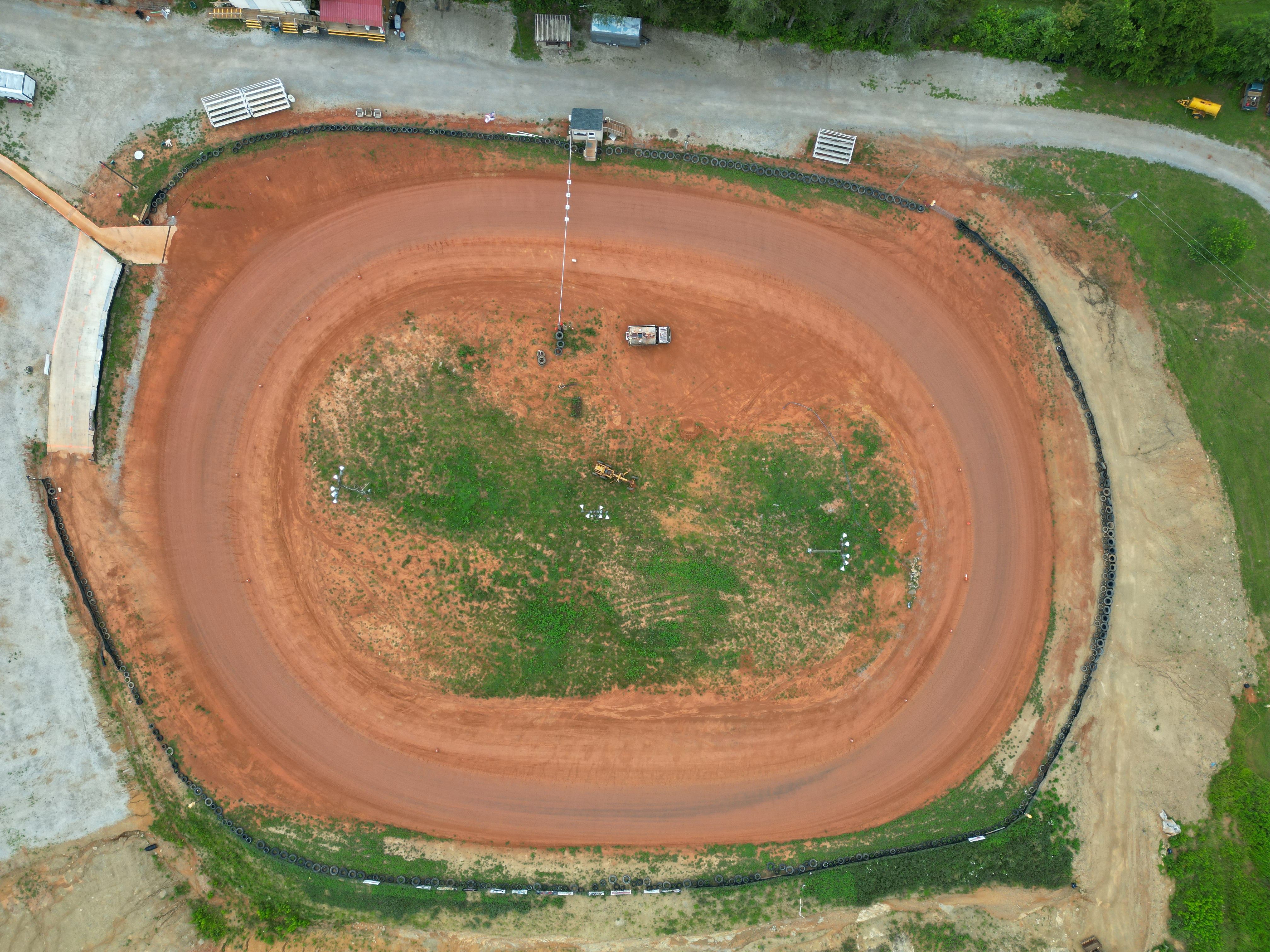
Walk the Track Before You Trust the Notebook
The most useful ten minutes of a race night happen on foot. Before hot laps, walk the corners and put your hands on the surface in three places, and do it in the same three places every week so you build a reference you actually trust. Notes only work if they are compared against something.
What to Check and What It Means
Kneel down at the bottom, the middle, and a car width off the wall. You are gathering four pieces of information, and none of them require a tool you do not already own.
- Moisture depth. Push a finger into the clay. If it comes back muddy an inch down, the track is holding water and will stay racy longer than it looks.
- Surface texture. Smooth and polished means the line is already sealing over. Loose and grainy means material is still moving and a cushion is going to build.
- Color break. Dark clay is wet clay. Watch where the dark stops. That boundary is where the fast line will live in about an hour.
- Ruts and holes. Note them before you meet them at speed. A hole on entry changes shock choice more than most people admit.
Then watch the first cars on the track and forget about your own class for a minute. Watch tire spray. If the cars are throwing a rooster tail, there is still moisture to burn. When the spray turns to dust, the clock has started on the slick track and you have maybe two races to get ready for it.
Adjustments That Match the Stage
You are not rebuilding the car between races. You are making the two or three changes that follow the surface, and the sequence is remarkably consistent from one Saturday to the next.
- Going from tacky toward slick, free the car up. Softer right rear, less bite, and a little less stagger if your class allows it.
- Chasing a slick bottom, get weight working on the rear tires through the corner rather than adding more of it at rest. Shock rebound does more here than another twenty pounds of lead.
- Racing a cushion, get the car to sit down on entry so the left front stays loaded. Cushion racing rewards a car that changes direction without waiting.
- Tire choice trumps every one of the above. When a compound decision and a chassis decision conflict, make the tire right and let the chassis be slightly wrong.
Everything you learn this way is class specific, and the rules move the goalposts. Before you make a change that touches weight, tire or engine, read through the Southern Raceway class rules and payouts so a good adjustment does not turn into a tech line problem.
Gates open Saturday nights in Pace, Florida. Check the schedule, grab your class rules, and get the car through tech the first time.
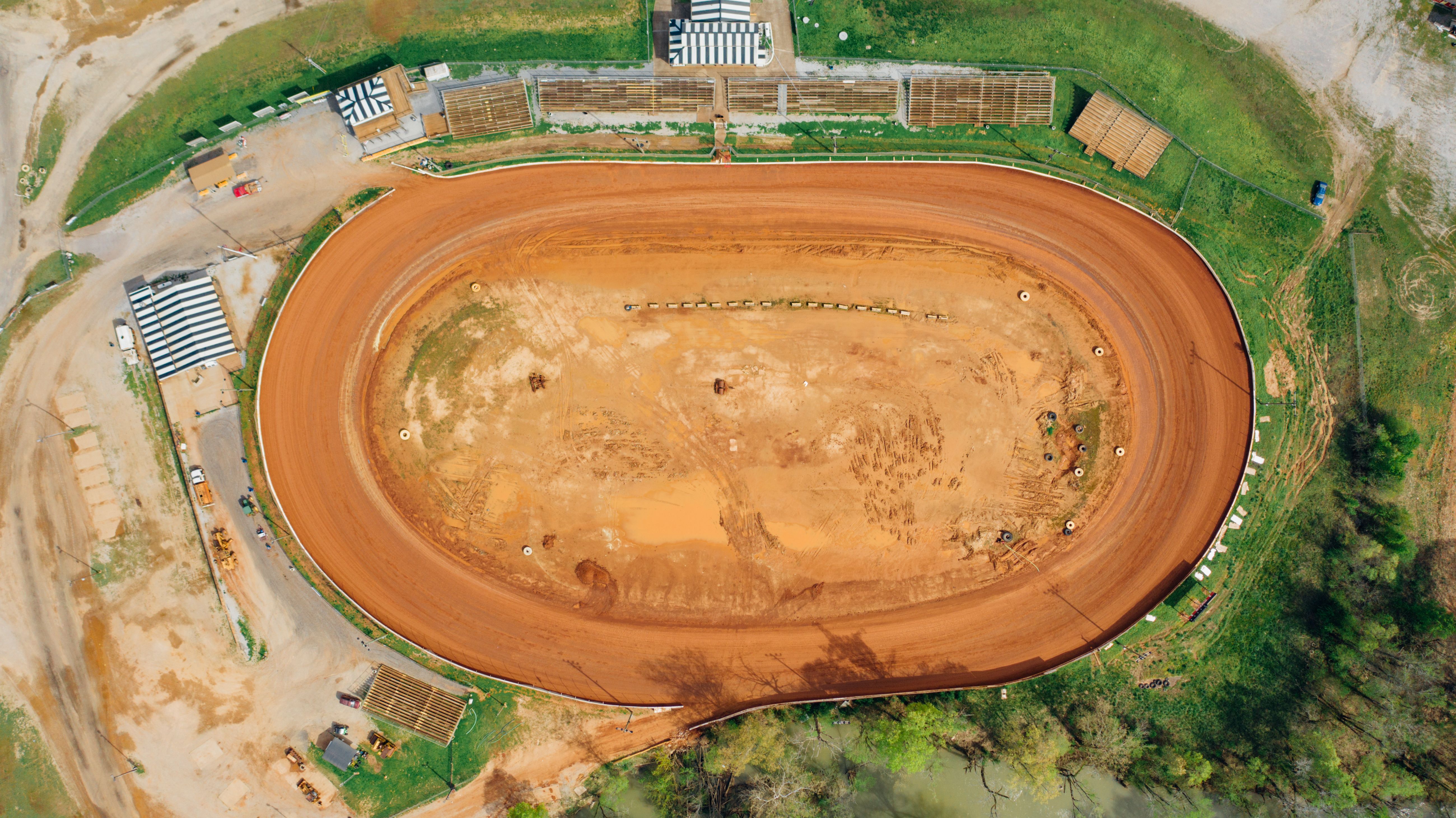
Driving the Track You Have, Not the One You Wanted
Setup gets a car close. Driving is what converts a close car into a finish. On a surface that keeps changing, the drivers who move forward are the ones who accept the racetrack as it is at that moment rather than the one that suited them in the heat race.
The single most common mistake on a slick track is entry speed. Drivers carry the same brake marker they used two hours earlier, the front tires wash, they get out of the throttle to save it, and the car never gets pointed. Slick tracks want an earlier lift, a car that rotates, and a throttle that comes back in one smooth motion rather than three stabs. It feels slower. It is not.
Reading Traffic as a Second Data Source
The cars in front of you are running an experiment you get to watch for free. Use them.
- If the leader is running the top and lapped cars are stacked on the bottom, the cushion is real and it is worth the risk.
- If a car ahead gets loose in the exact same spot two laps running, that is a hole or a wet patch, not a driver error. Move your line a lane.
- If nobody can complete a pass anywhere, the track has taken rubber and the bottom is the only lane left. Track position becomes everything and the restart is the whole race.
- If dust is hanging over the backstretch, expect the surface to keep changing right through the final laps.
Write down what you saw as soon as you get back to the trailer, while it is still honest. Compare it against the posted weekly race results and you start to see which conditions actually suit your car and which ones you have been surviving. That pattern is worth more than any single fast lap.
Trust the Clay Over the Notebook
A setup sheet is a record of a night that already happened. The racetrack in front of you does not care what worked in April. It is drying at its own rate, in its own weather, under its own car count, and it will hand out grip to whoever is paying the closest attention. That is genuinely good news for smaller budget teams, because reading a surface costs nothing and the reward shows up in the same finishing order as an expensive motor.
Get to the track early enough to walk it. Watch the classes that run before you. Make small changes that follow the moisture instead of fighting it, and let the car be a little wrong in the direction the racetrack is heading rather than perfectly right for the conditions you already used up. Then come try it against the Panhandle regulars. The Southern Raceway race schedule has the gate times and the special event lineup, and the surface will be waiting to tell you something new.
Class rules, weekly payouts, and everything the pit gate needs before your first green flag.

