

There is a certain kind of Saturday night that nobody wants. You unload, you warm the car, and fuel starts weeping from a fitting that was bone dry in October. Or worse, you roll through tech, the inspector pulls a sample, and the number on his meter does not match the number in the rulebook.
Alternative fuels are not a rumor anymore. Pump ethanol blends, E85 classes, and sustainable race fuels are showing up in more rulebooks every season. The engines usually handle it fine. The rubber, plastic, and soft metal parts around the engine are the ones that quit first.
This is a hands on look at what actually fails, why it fails, and how to walk into tech with paperwork and parts that hold up. No panic required. Just a plan.
Three Chemical Habits Behind Every Failure
Ethanol is alcohol. It behaves differently than gasoline in three ways that matter to a racer, and every problem you hear about traces back to one of them.
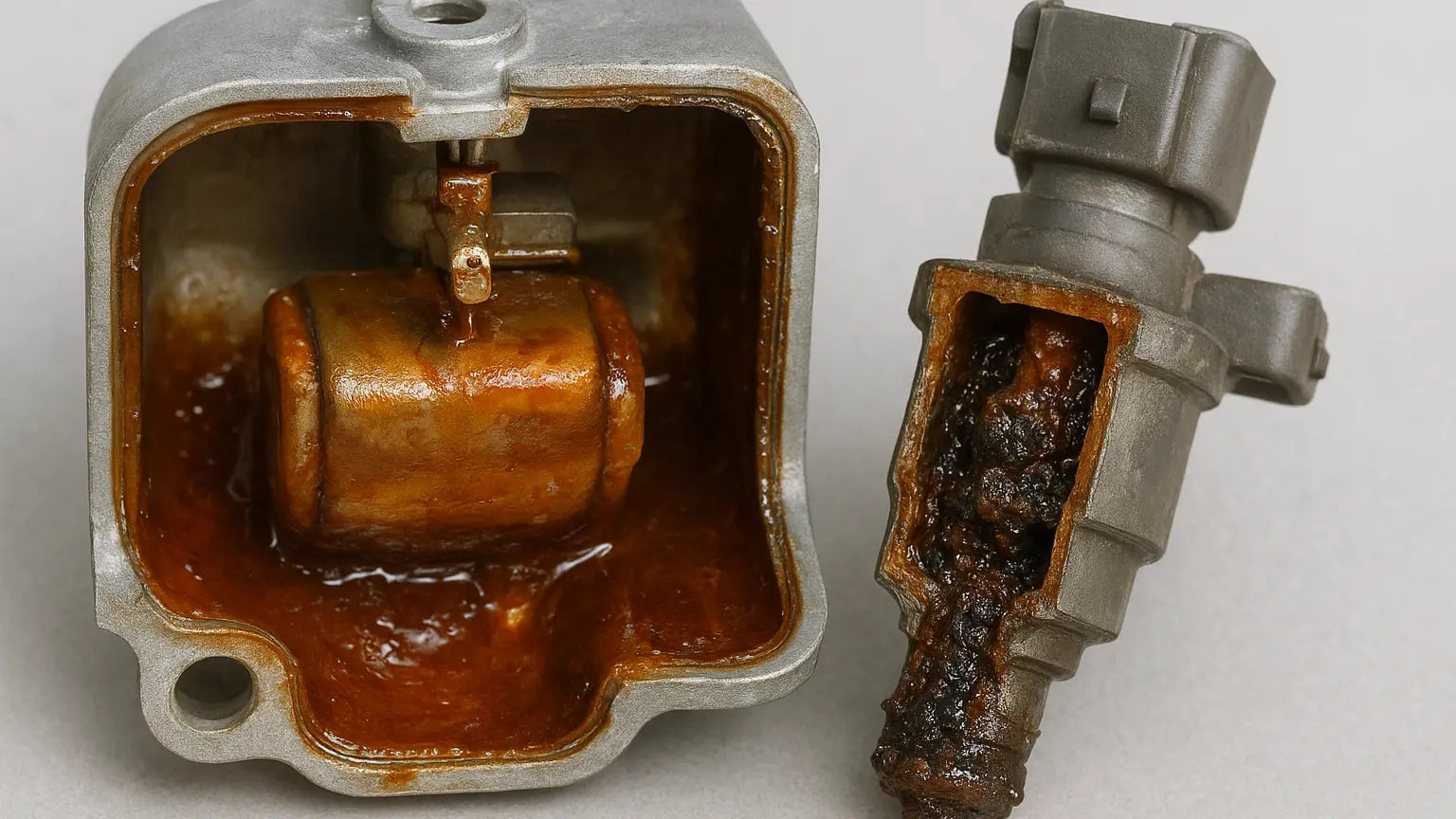
It is a solvent. Ethanol dissolves things gasoline leaves alone. Old rubber, varnish inside a carburetor bowl, the liner in a cheap fuel hose, sealant on threaded fittings. That dissolved gunk does not vanish. It travels downstream and lodges in your needle and seat or your injectors.
It attracts water. Gasoline and water separate. Ethanol and water mix and stay mixed until the blend gets saturated, and then everything drops out in the bottom of your tank as a corrosive layer. That layer is what pits fuel pump internals and eats aluminum over a winter of sitting.
It carries less energy per gallon. A gallon of ethanol has roughly two thirds the energy of a gallon of gasoline. To make the same power, you have to flow more of it. That is a jetting change, a pump change, and sometimes a fuel line size change all at once.
The Parts That Give Up First
Failures follow a pattern. When shops start converting cars, the same list of parts shows up in the trash can:
- Old rubber fuel hose that swells, softens, then sheds its inner liner into the carb
- Accelerator pump diaphragms and carb gaskets made from non alcohol compatible material
- Cork and paper gaskets anywhere fuel touches them
- Zinc plated or pot metal fittings that corrode white and chalky
- Fuel pump diaphragms and check valves in pumps built for gasoline only
- Sending unit floats and o-rings in the tank, especially anything more than a decade old
- Fiberglass or resin fuel cells where the resin was never rated for alcohol
Notice how little of that list is engine internals. The block, the pistons, the valves, they are mostly fine. Your money goes into everything soft between the fuel cell and the intake.
One more thing worth saying plainly. Mixing fuels midseason is where most surprises come from. A car that ran straight gas in June and gets topped off with a blend in August has hoses that swelled in one direction and are now being asked to swell in another. That is when seeps turn into drips.
Dialing In Fuel Delivery And Reading Lambda
Here is the part that trips up experienced racers. Ethanol does not just need more fuel. It needs a different way of thinking about air fuel ratio, and the numbers on your old notes stop meaning what they used to mean.
Straight gasoline runs best somewhere near a 12.5 to 1 air fuel ratio under load. E85 wants closer to 9 to 1 by weight, because there is oxygen already in the fuel molecule. If you look at a wideband gauge that is reading in traditional air fuel ratio and you see 9.5, your first instinct is to panic and lean it out. Do not. Switch your gauge or your software to read lambda instead. Lambda 0.85 is lambda 0.85 no matter what you pour in the cell, and it removes the mental math entirely.
Carburetor Cars
Expect to open up jets roughly 20 to 30 percent in area over a gasoline baseline, which is not the same as 20 to 30 percent in jet number. Start conservative and creep richer while watching plugs and temperatures. A few things that catch people:
- Needle and seat assemblies often need to be one size larger to keep the bowls full
- Power valve timing usually needs revisiting since the mixture curve shifts
- Accelerator pump volume almost always needs to go up because ethanol does not vaporize as easily when cold
- Idle mixture screws will sit farther out than you are used to, and that is normal
Fuel Injected Cars
Injectors need roughly 30 percent more flow to make the same power. If your current set is already near duty cycle limits on gas, they are done. Bigger injectors also mean checking that your pump and regulator can hold pressure at the new flow rate, and that your wiring is up to the extra amp draw.
The good news is real. Ethanol has a high effective octane and a strong cooling effect as it evaporates in the port. That combination lets you run more compression or more timing than you could on the same class legal gasoline. Racers who take the conversion seriously often find power, not lose it. Racers who just swap fuel and hope tend to find lean misfires in turn four.
Cold starting deserves its own note. Alcohol does not want to light when the intake is cold. Plan on a richer start enrichment, more choke, or a small priming setup. That is not a tuning flaw, it is chemistry.
Log everything. If you are still tuning by feel, this is the season that habit gets expensive, because every tenth you guess away shows up in every lap time you cannot explain. Write down the fuel, the batch, the ambient temperature, the jet or injector size, and the lambda you saw. Ethanol content varies more between deliveries than gasoline does, and a two point swing in ethanol percentage moves your tune.
Gates open Saturday nights in Pace, Florida. Check the schedule, grab your class rules, and get the car through tech the first time.
Work The List In The Shop, Not The Tech Line
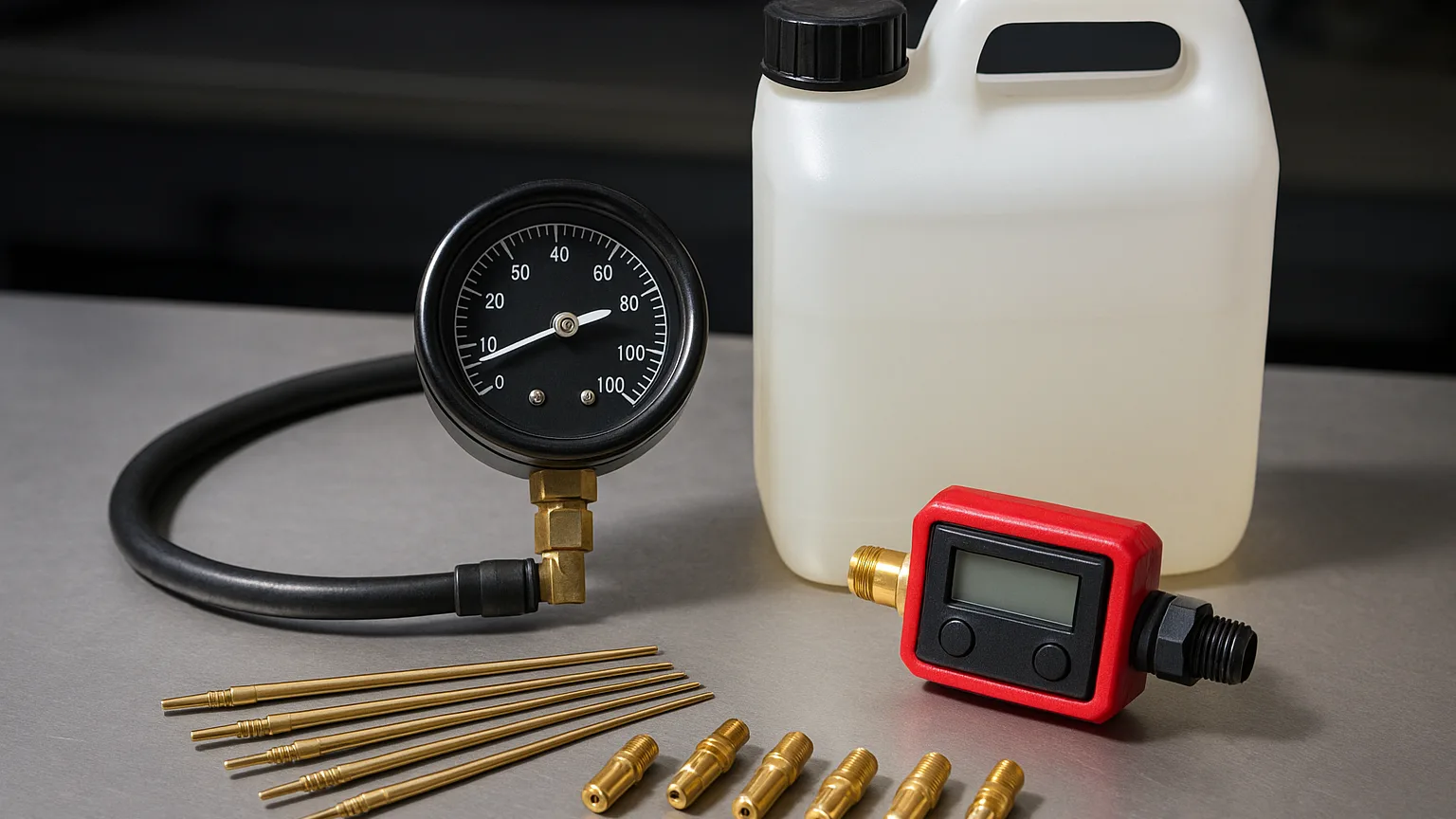
Tech inspectors are getting better tools. Handheld ethanol content meters, refractometers, and dielectric testers cost very little now, and more sanctioning bodies are buying them. Some series specify a fuel by brand and spec sheet. Others allow a range of ethanol content and check it at the pump or the cell. Either way, "I think it is legal" stops being an answer.
Work through this list in your shop, not in the tech line.
Paperwork And Samples
- Print the current fuel rule for your class and keep a copy in the trailer
- Save receipts for every fuel purchase with date and volume
- Keep the spec sheet for any spec fuel you run
- Pull a small sample from each drum and label it with the date, so you can prove what went in the car
- Buy your own ethanol content meter and check every batch before it goes in the cell
Hardware Inspection
- Replace every fuel hose with a fully alcohol rated line, including short jumpers people forget behind the firewall
- Swap zinc plated fittings for stainless or anodized aluminum
- Confirm your fuel cell bladder and foam are rated for alcohol
- Verify the fuel pump is alcohol compatible, not just "should be fine"
- Install fresh filters, then plan to check them again after two nights out because the first tanks will flush debris loose
- Rebuild the carburetor with an alcohol rated kit rather than reusing old gaskets
- Check the tank sending unit, cap seal, and vent lines
- Look for white powdery corrosion at every joint, which is your early warning
Tune And Safety
- Set your wideband to read lambda and note your target
- Record baseline jetting or injector data before the first change
- Verify oil condition, since ethanol dilution shows up as fuel smell and a rising oil level
- Confirm your fire system rating covers alcohol fires, because they burn nearly invisible in daylight
- Carry a water source at the pit cart, since alcohol fires respond to water differently than gasoline fires
Storage Between Events
This is the step most racers skip and most racers pay for. Never store a car with a partial tank of ethanol blend over a long break. The air in that cell carries moisture, the fuel absorbs it, and by spring you have a corrosive soup sitting on your pump pickup. Drain the system, run the carb bowls dry, and fog the intake if the car sits more than a month. If you would rather leave fuel in it, fill the cell completely so there is no air space to breathe.
Longtime engine builder Ray Cardin puts it simply when racers ask him about switching. "Every alcohol conversion I have seen fail, failed at a five dollar part," he says. "Nobody ever cracked a block over it." That matches what shops see across the board. The engine is rarely the problem. The fittings, the hose, the gaskets, and the storage habits are.
Get Ahead Of It And The Rulebook Stops Being Scary
The move toward ethanol blends and sustainable fuels is not something a racer can vote away, and honestly it does not deserve the dread it gets. Alcohol is a good race fuel. It resists detonation, it cools the charge, and it lets a well built engine make real power. The trouble only starts when a car built entirely around gasoline gets fed something its soft parts were never designed to hold. Hoses swell, gaskets weep, pot metal corrodes, and the jetting that worked all last season suddenly runs lean where it hurts most.
So handle it now, in a warm shop, with a parts list and a notebook instead of a flashlight and a flat tire iron. Replace the soft parts with alcohol rated versions, size the fuel delivery up for the lower energy content, switch your gauge to lambda so the numbers stop lying to you, and start keeping receipts and samples like the tech line already asked for them. Do that once and the next rulebook update becomes a paragraph you read, nod at, and file away. Everyone else will be in the pits at midnight chasing a leak they could have found in February.
Class rules, weekly payouts, and everything the pit gate needs before your first green flag.


