

Part 1 of 2 in the series Crack Watch: From Chip to Checkered Flag: The Complete Series.
You hear it before you see it. A sharp tick off the glass on the way home from the track, or a pebble kicked up by the hauler ahead. Ten miles later there is a little white star sitting in your line of sight, and you tell yourself you will deal with it after the next race. That is the moment the clock starts running against you.
Windshield damage is not static. Laminated glass holds a chip in place with tension, and every temperature swing, every pothole, every slam of the door pushes that tension around. This series was built with insights from Clear Quality Auto Glass, whose technicians see the same pattern week after week: the chip looked at within a day or two got filled, and the chip that waited a month became a full replacement. Nothing about the impact changed. Only the time did.
So the first job is triage, not repair. Know what kind of break you are looking at, how big it really is, and where it sits relative to your eyes and your wipers. That tells you whether you have a quick resin job or a windshield out of the car.
What The Shape Of The Damage Tells You
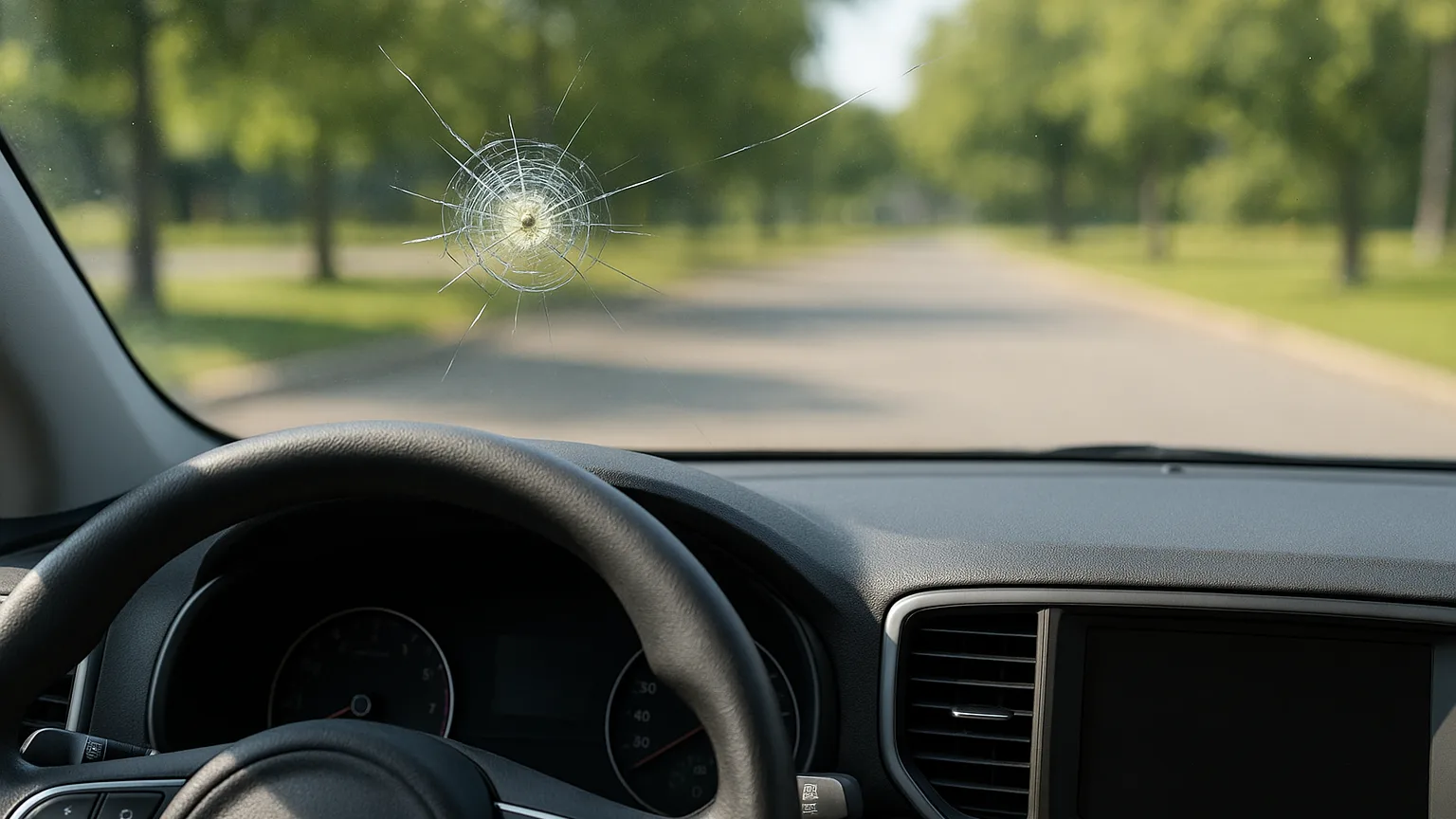
Look at the damage from outside, then from the driver's seat, because glass hides depth. Most breaks fall into a handful of shapes:
- Bullseye: a round, dark cone with a clear circle around it. Friendliest to repair because resin flows into a clean pocket.
- Star break: a center point with short legs radiating out. These are the ones that grow. Each leg is a crack waiting for a reason to run.
- Combination break: a bullseye with legs. Common, repairable, but the legs still need watching.
- Half moon: a crescent from a glancing hit. Often fine to fill.
- Surface pit: a nick in the top layer only, with no cone underneath. Cosmetic and low urgency, but it can hold water and haze over.
- Edge crack: a line starting within about two inches of the frame. This is the bad one. Edge cracks travel fast because that is where the glass carries the most stress.
Now measure. A dollar bill folded in half gives you a rough three inch reference if you do not have a tape handy. As a working rule, chips under about an inch and cracks under roughly six inches are strong repair candidates. Past that the odds tilt toward replacement, and they tilt harder if the damage is deep enough to catch a fingernail on the inside surface.
Location is the part people underestimate. A dime sized chip in the lower passenger corner is a nuisance. The same chip in the driver's swept viewing area can fail a tech inspection even after a clean repair, because resin leaves slight distortion. Anything sitting over a camera mount, rain sensor, or heating element behind the mirror gets its own set of rules, which is exactly where repair tonight or replace all becomes the decision you have to make instead of postpone.
Two Days To Keep That Chip From Growing
Once you know what you have, the goal is simple. Keep the break exactly the size it is until a technician can get resin into it. Four forces make a chip grow, and you can control all four with things already in your trailer.
Heat, Cold, And Moisture
Temperature is the number one crack accelerator. Glass expands and contracts, and the chip is a weak point that cannot move with the rest of the panel. Park in shade. Do not blast the defroster onto a frozen windshield, never pour warm water on ice to clear it, and do not aim the AC vents straight at the damage on a hot day. Even heat, changed slowly, is what you want. If the car has been baking in the sun, crack the windows and let the cabin come down on its own before running the AC hard.
Water is the other half of the problem. It wicks into the break by capillary action, and dirt follows it. Once contaminants set up inside the cone, resin cannot bond fully and the repair stays visible. Cover the chip with a small square of clear packing tape from the outside. Do not press hard, do not use duct tape, and do not use a bandage that will leave adhesive residue in the pit. Skip the car wash entirely, especially high pressure wands, and keep rain repellent and glass cleaner off that spot.
Flex, Pressure, And Road Shock
A windshield is a structural part of the body, so anything that twists the shell twists the glass. Washboard pavement and expansion joints add thousands of tiny shocks that walk a star break outward. Practical steps that cost nothing:
- Close doors gently instead of slamming them, and roll a window down first to release cabin pressure.
- Avoid jacking the car from a single corner or loading it onto a trailer with an uneven ramp.
- Do not push on the glass from inside for any reason, including scraping frost.
- Keep heavy gear off the cowl and hood so the frame is not carrying odd loads.
- Drive the smooth route and slow down for railroad crossings and speed bumps. A car strapped down tight on a rough road takes vibration straight through the chassis.
Careful prep like this is the same mindset behind pre-teching for ethanol, where small maintenance decisions made early save an entire race weekend later. None of it heals anything. It buys time, and time is the only thing standing between a fifteen minute resin injection and a full glass replacement.
<<Gates open Saturday nights in Pace, Florida. Check the schedule, grab your class rules, and get the car through tech the first time.
Signals That Mean Call A Technician Now
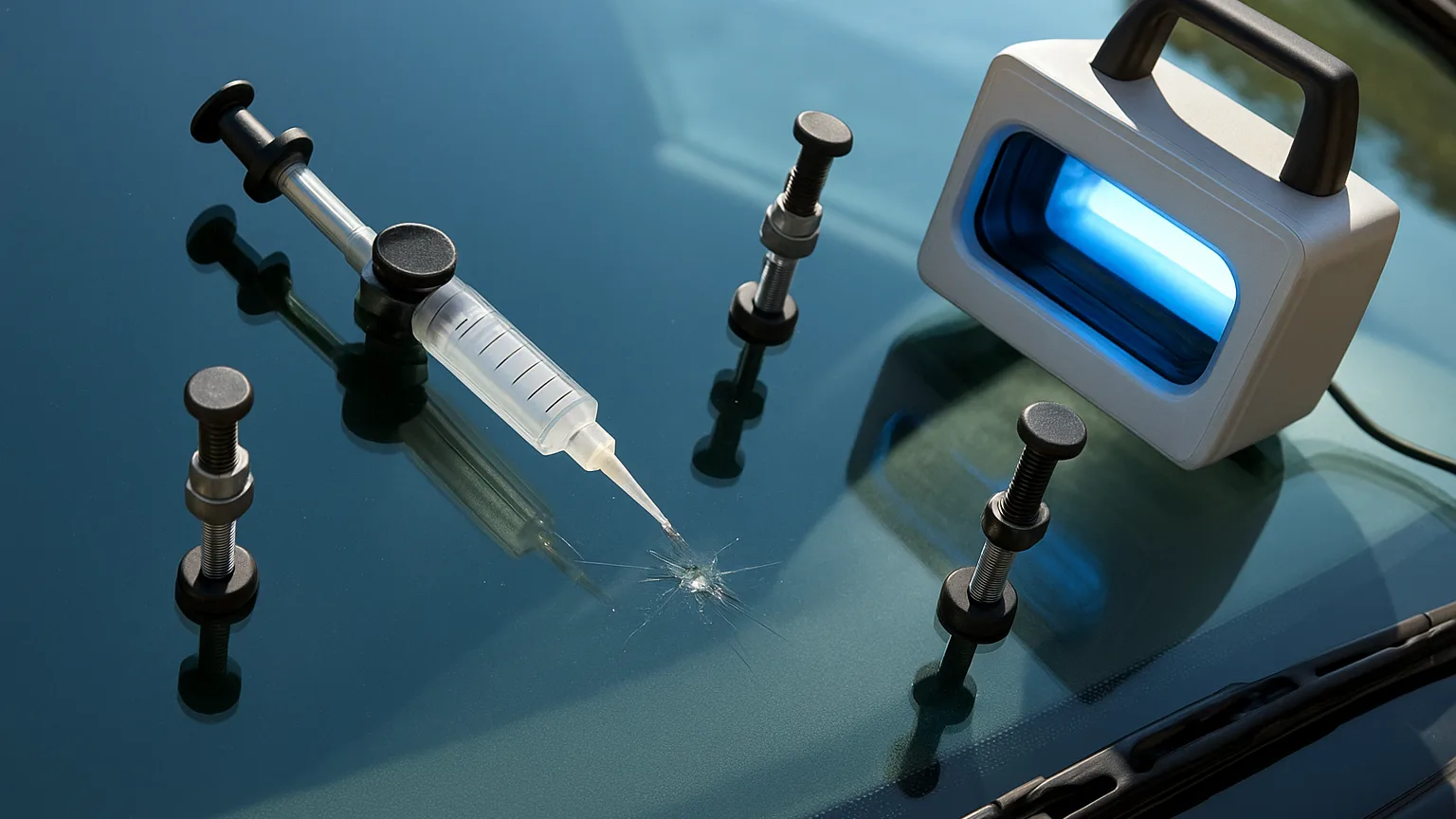
There is a point where holding the line stops working and you need a professional with a bridge, a vacuum cycle, and UV resin. Some signals mean call today, not next week.
- A leg on a star break got longer overnight. Mark the tip with a grease pencil and check it each morning. Any movement means it is running.
- The damage reaches within two inches of any edge of the glass.
- The inner layer is damaged, not just the outer. Run a fingernail along the inside surface. If it catches, the laminate is compromised.
- You see three or more separate impact points, or one large area of crushed glass.
- The chip sits inside the driver's direct sight line and creates glare at night or in low sun.
- Moisture is already fogging inside the break, which shows the pocket is open and filling.
What A Good Shop Does Differently
A proper repair is not squirting glue in a hole. The tech cleans and dries the pit, mounts an injector that pulls a vacuum to remove trapped air, pushes resin under pressure into every leg, cures it with ultraviolet light, then scrapes and polishes the surface flat. Done in a parking lot with a hardware store kit and no vacuum stage, you get air pockets that go gray and legs that keep traveling. Shops with genuine craft standards, the kind called out in write ups of nevada ranked by craft, tend to be transparent about which breaks they will not attempt, and that honesty is worth more than a low quote.
Modern windshields also carry sensors, cameras, and antennas. If your car has lane keeping or adaptive cruise, replacement usually requires recalibrating the forward camera afterward. Guidance from Clear Quality Auto Glass points at a habit worth building: tell the shop your exact year, make, model, and options up front so the correct glass and calibration path are lined up before anyone touches the car. That one conversation is often the difference between a same day fix and a two day wait on parts. Same logic as chasing data instead of feel when every tenth you guess away is on the line: measure first, act once.
Build A Two Minute Glass Check Into Your Routine
Racers already walk the car before loading, so add the windshield to that lap. Look at it in raking light, low sun or a flashlight held at an angle, because that is when pits and legs show up. Photograph anything new with the date, so when damage appears you know how old it is and whether it has moved. That history is genuinely useful when the tech decides between filling it and pulling it.
The Chip You Handle Today Is The Race You Keep
Windshield damage is one of the few problems in motorsports where doing almost nothing is the wrong answer and doing something small is the right one. Identify the shape of the break, measure it against the inch and six inch guidelines, check how close it sits to the edges and to your eyes. Then protect it from heat spikes, standing water, chassis flex, and rough pavement while you get a technician on the calendar. Unglamorous steps, and they are the reason two identical rock strikes end up with two completely different bills.
Once the break is stable, the real decision waits: fill it or replace it. Next time we get into resin injection versus full glass replacement, what cure time and safe drive away time mean for a Friday night load out, and why the first hard cold snap turns a repair you could have done tonight into a windshield you have to buy.
Class rules, weekly payouts, and everything the pit gate needs before your first green flag.


